
Management Proverbs-Plan B
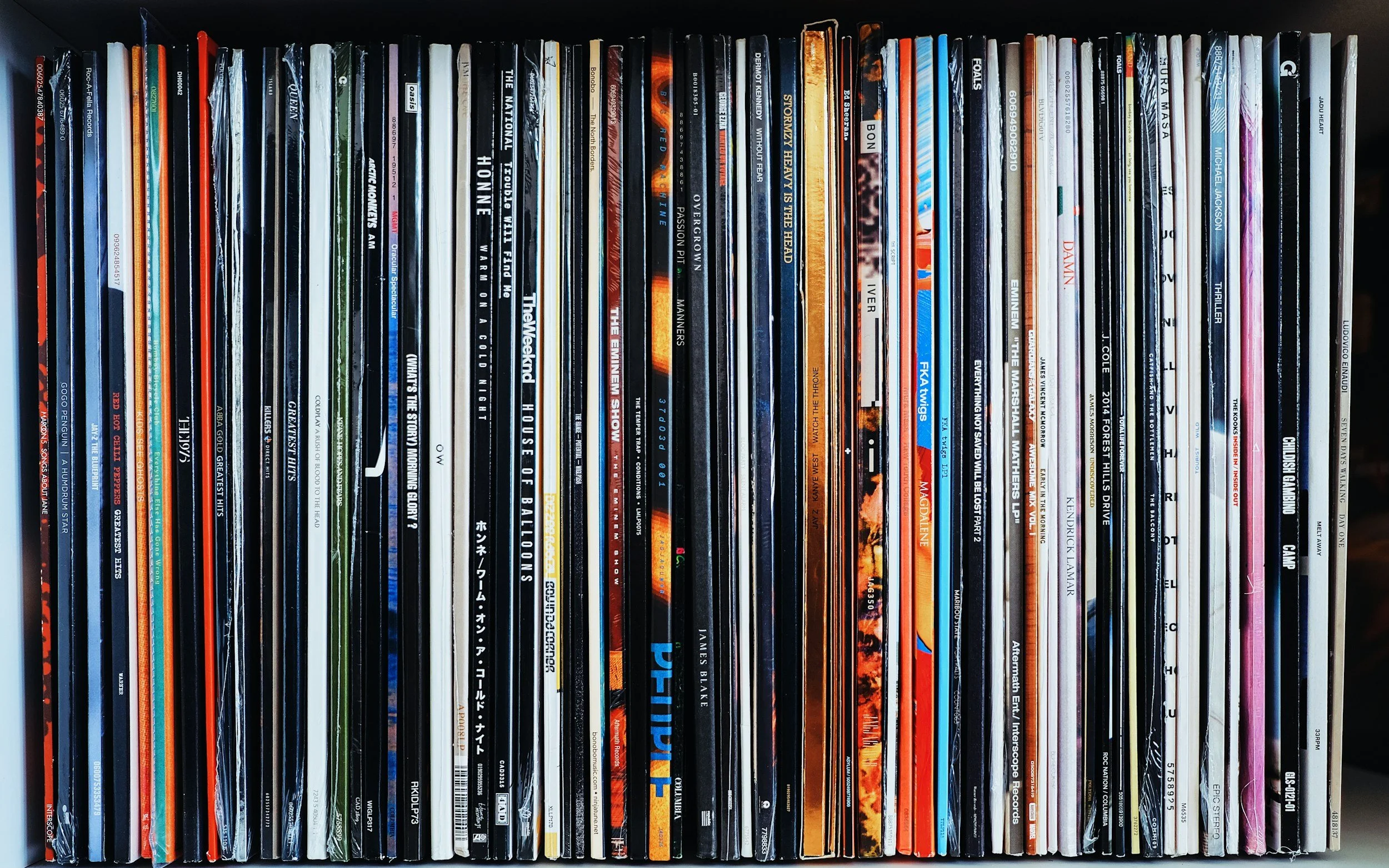
I have a passion for vinyl. Not siding. Records. It’s just the whole package. The cover art, the credits, the liner notes, the fidelity. Some of my best Christmas gifts from Santa were made of vinyl. The Beatles “Revolver”, Steppenwolf’s “Born to Be Wild,” to name two. Santa rocks.
Over the years, my vinyl collection has been, shall we say, volatile. It has grown; purchased with money I made in the summer digging trees for F&F Nursey in Holmdel, New Jersey; shrunk when I needed beer money in college; grown when I won money playing backgammon; etc. I joined and quit the Record Club of America multiple times, getting my free 12 albums for a penny and a commitment to buy a bunch more. How else would any sane person buy Don McLean’s “American Pie” or Emerson, Lake and Palmer’s “Pictures at An Exhibition.” Since those tumultuous days, “the collection” has stabilized and grown. Although it is rather humbling to realize how dumb you were to buy “Zenyatta Mandatta” for the third time.
But there is a silver liner. The fluctuations, now stabilized, in “the collection” have given me the opportunity to augment the collection with music I’d never owned before but had wanted to. Aretha Franklin’s “The Atlantic Singles Collection”, Stephen Stills “Manassas”, Prince’s “Purple Rain”, and the Rolling Stones “Get Yer Ya Ya’s Out” are some good examples. It also feels better to buy something you have never owned than buying “Freewheelin” for the third time. (Although I could buy that Dylan album thirty times and fell no pain.)
All this said, I don’t play the vinyl all that often these days. I used to. When I had a system I bought from my secretary’s husband, decades ago when he was upgrading. Life was simple. Grab CSNY, preen the sucker, cue the needle and let her rip. And maybe sit on the floor and watch a hockey game with the sound off. OK. And maybe a beer. Sadly, those days are gone. When we redid our house, I went to a wireless speaker system. The college dorm look clashed with the new decor. I don’t recommend wireless for vinyl; it’s makes spinning a disc a little more trouble than it used to be and you lose the fidelity. Plus, I am out of preening solution. And lazy. (“Stayed in bed.”) The combo has taken it’s toll on my juke box music.
The other thing going on is that, despite records just sitting in their nice safe place, properly cared for, under the assumption that nothing could happen to them in that protected state, I am increasingly surprised and frustrated about the skips, the skips, the skips. This has happened several times over the past eighteen months to records that were otherwise in perfect condition at last listen. To me, a record skipping is worse than nails on a chalkboard. After all, a chalkboard isn’t perfect. “Layla” is.
In the back of my mind, I always had a Plan B in case I wanted to move beyond vinyl. Moving to a smaller living space might be one reason. Finding out preening solution causes near-sightedness might be another. So, “Spotify” was aways lurking. Oh, I had Sirius. It comes with every new car and since the Sirius folks are serious about not wanting to report a dip in subscriber revenues. Threaten to cancel and they give it to you for free. But Spotify is the real deal. Not just a genre. But every record, anytime, anywhere. I had considered it, weighed the cost, considered the drop-off in audio quality, etc. and demurred. Plus, I owned a great record library. But Spotify was Plan B.
So, the other day, I am down in the basement doing some work and decide to put on “Get Yer Ya’s Ya’s Out.” And wouldn’t you know, smack dab ion the middle of “Carol,” skip city. I couldn’t take it. One skip too many. That day, I called my kids and said, “If you want “the collection,” you’d better come and get it because I am going to Plan B.
And I have to say, so far—another musical reference--I have been very pleased.
In business--either in running your own business or in working at a someone elses—having a Plan B is essential. The answer to why is obvious. Because many, many times, almost with certainty, Plan A does not come to fruition. Each time I ran a bank, the last thing I wanted to do was sell the damn thing. But in all cases, my owners disagreed. Plan B was run another one. Plan C was run another one. Plan D was run another one. You know, at some point, a guy gets a reputation, a three year non-compete and some elderly relatives, and that demands recalibrating your Plan A, B and C. In my case, the next series of plans involved serving as the CFO of the Pittsburgh Diocese with Plan B being seriously retiring. (Admittedly, I failed at both of those Plan Bs. See what I mean? That’s why you need a Plan B.)
If you were running a restaurant when Covid hit, which certainly came out of nowhere, you had to develop Plan A, B, C, D in a hurry. Interestingly, because of the uncertainties of the epidemic and the government’s response to it, developing contingency plans—which is what Plans A, B, C, etc. are—was very complicated calculus. One had to balance legitimate health concerns, with the impact on employees, with the long-term future of the company, with the extent of the resources you might have to execute any of those. Very hard. That said, the Plan B-ers fared better. Many who didn’t develop contingency plans—either at the time or prior to Covid hitting--went out of business. Those that did, largely survived.
But, Dave, no one could have predicted COVID, right? Right. But you could have predicted “something.” Stuff always, always happens. And if you are prudent, save money, develop loyal employees and customers, it gave you many more options, even in the face of the mishegas COVID was, when the caca hits the horizontal oscillator, and you needed to go to Plan B.
Having contingency plans is equally important in your career. I remember telling Tom O’Brien, who was the Head of Pittsburgh National’s commercial banking department and who eventually became the Chief Executive Officer of PNC, that I wanted his job in my first interview with him. That’s chutzpah!! That was Plan A. But it didn’t work out at PNC—maybe a little too much chutzpah—and I took another route—a Plan B; one of many I had in my pocket at the time—several years later, becoming a relationship manager at a British bank. A far cry from replacing Tom O’Brien. But I zigged and I zagged and it ended up working out.
That takes me to my final couple points about Plan Bs / contingency plans.
First point. Even though in the above examples, I went on to Plan B, I never gave up on my Plan A. I went to Plan B and C, D and E, and ended-up being a Chief Credit Officer, the Head of Strategy and Development and some other things along the way; always with Plan A---being a bank CEO—in the back of my head. And, eventually, I got there. So, just because you veer from Plan A to Plan B, doesn’t mean you give up on it. You just have to exercise a little patience some times.
Second point. Having Plan B, C, D, etc. gives you a certain peace of mind; that being, if Plan A doesn’t work out, you have options. This applies to everything from business strategy to career options to personal relationships. The peace of mind comes from knowing you have other cool and rewarding things you can do, even if the eventual solution was not “top of the list; “A” number one.”
Third point. My guess is you will find, like I did, that Plan A is great, but Plan B can be just as great. Different for sure. But just as great. Had my Plan A not worked out, having a Plan B+ approach would have resulted in a fine career for which I would have been ever grateful. That may be easy to say since Plan A worked out. But maybe that’s the way the journey was meant to be. And I am pretty sure that other Plan Bs, Cs, Ds and Es would have surfaced to for great career.
So, having a Plan A—playing life at a high fidelity, rock ‘n roll level—is clearly the starting point. At least for me. It is your dream, after all!!! Go for it. But having a back-up plan can “make the rafters rock” too. So, long live rock. And Plan Bs.
Show A Little Faith.