
The Traffic Stop. A Yellow Light.
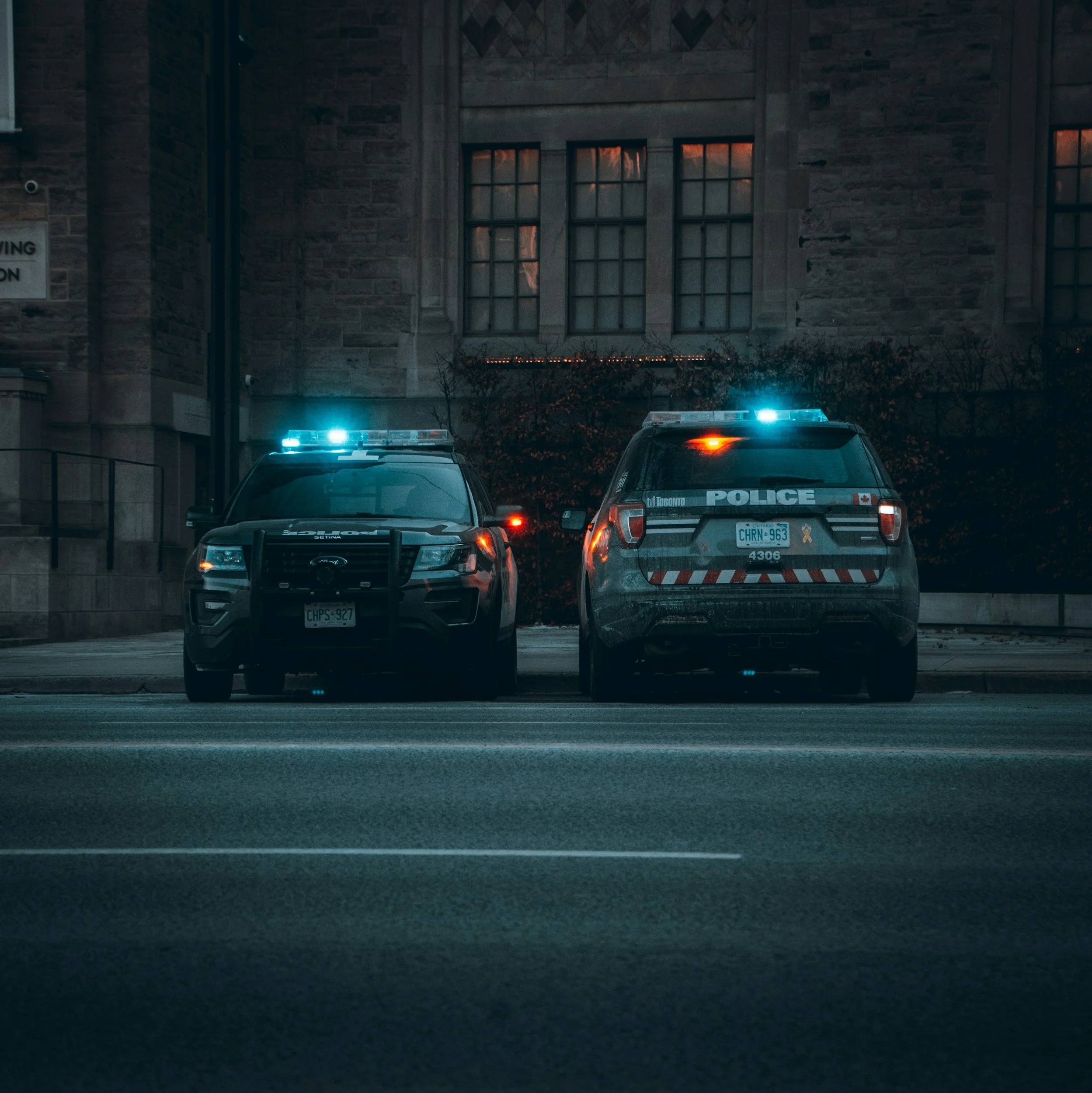
How can I stop thee? Let me count the ways? If Elizabeth Barrett Browning were a traffic cop in Pennsylvania, had access to the police database and had a sense of humor, there might be an entry in the comments section about David R. Misch, height 5’11’’, eyes green, organ donor, in there somewhere. These are “stops,” mind you, very few tickets or accidents, except the one ticketed stop I will tell you about here. And I am very glad my spouse does not have access to this database. We already have some mild perceptional differences about the quality of my roadmanship.
As I said, I have gotten several traffic stops over the past few years. The most recent one was on the Turnpike. I was listening to “The Bible in a Year “with Father Mike Schmitz. Gospel truth. Because the turnpike speed limit is 70 mph—yes, I was doing the speed limit; less than since I had the “cruise” on at 68-ish—and because I have a 20-year-old Honda CRV that has all the noise deadening capabilities of a Flintstone mobile, I had the phone to my ear. I pass by a state trooper and, after I pass by, he puts on his lights and pulls out. I pull over. He pulls behind me, gets out and approaches my car.
“What’s up?” I ask. The officer proceeds to tell me there’s a new law that goes into effect January 1st that prohibits holding the phone while driving. I thank him for warning me but did take the opportunity to plug “The Bible in A Year.” He still gave me a warning.
Warning in hand, and before I took off, I played around with putting the phone in different spots in the car—the cup holder, the tray, the dashboard, etc. to see if I could amplify the sound. What worked best was to place the phone above the steering column on the shelf under the speedometer. The box-like structure created a mini amphitheater that worked great. No hands. No cops. No problem. (There’s a country hit in there somewhere.)
Fall back in time five years. I get up on a fine winter’s morning, bright sunny day, refreshingly cold, a little snow on the grass, clear roads. I help my wingman, Buddy, into the car for our drive to Ruthfred Plaza. We listen to the Dead, get coffee at Judy’s Java Joint and pick up our dry cleaning. It is always a pleasant outing. We do it almost every Saturday. Life’s little pleasures.
I come to the stop sign that is five minutes from my house and, while I don’t come to a full stop, I am pretty damn close to it. I cross the main road, make a left into my street and a township policeman pulls me over, maybe two-hundred yards from home. Luckily, out of view of my house. The officer comes to my window. He must have been all of 22. He was more nervous than I. Newly minted. Long story short, he gives me a ticket for not coming to a full stop, says if I appeal it I may get a break (wink wink) and drives off. Now, fines are one thing. Points are another. This was worth three. Sigh.
Many thoughts were going through my mind like: My rolling stop was more legal than anybody else’s; at least I didn’t drive on the shoulder to get around the traffic like many do; at least I slowed down to a safe speed (my opinion); at least I slowed down at all versus not stopping at all which I see a lot at this intersection. But the most painful thought was that I got a warning at this same stop sign a few years prior. (Note to husbands: There is something in the Husband’s Rulebook about not needing to report traffic warnings to your spouse. You can just as easily say “I told you so,” to yourself when you blow it.)
In business, we get all kinds of warnings. Increasing turnover. Inability to hire. Decreasing productivity. Increasing absenteeism. Decreasing call center response times. Rising accident rates. Slowing accounts receivable. Lack of pipeline growth. Inability to convert pipeline growth. Customer call activity lower than normal. Whatever. Every business has a set of yardsticks and parameters above which is good, below which is bad. These are the “traffic stops” for your business. And traffic stops are much better than getting points or getting into an accident.
Much highway to travel here re: warnings and managing your business.
First, you just plain old have to have warnings signs. Much like traffic law, you need to have a set of rules by which you manage your business. To not have them is chaos. And results in a crappy company. Oh, yeah, you can get away with it for a time. But if you want to be the G.O.A.T.—why try and be #8—you need them. Full stop. (Get it?)
Second, we are not talking about the P&L or the balance sheet. By the time it shows-up on the financials, it is too late. What I am talking about are early warnings. In traffic law, they gave us a warning or a ticket for a rolling stop because it can cause an accident or, worse, get someone killed. You don’t want that to happen to your P&L, so your warning indicators need to be “leading” ones, not trailing ones. Profit is a trailing one. Pipeline is a leading one. This is not only important to you, the entrepreneur, but also important to your employees and customers, that is, you running a great and survivable business where they can reliably work at and do business with.
Third, you cannot have a 100 warnings signs. If you have 100, you have none. The temptation is to throw a whole bunch of spaghetti on the wall and see what sticks. Not the way to go. Good businesses take a thoughtful stab at 5-10 and, over time, refine them.
Fourth, once you get the warning, you cannot blow it off. When I had recieved the warning at that same intersection a year prior, I should have changed my practice. (At least at that intersection. Just kidding.) By contrast, my response to the hands-on warning was the right one. Figure it out. Fiddling around with where in the car I could hear the podcast AND comply with the law—you are going to get sick of this; but I don’t care; it’s “and not or;” and one of the most important business lessons that needs to be learned—required some thought and some time. But it addressed the warning without getting me some points.
Fifth, just because other businesses don’t have warning indicators or blow them off doesn’t mean your business should follow their lead. Even if another business has indicators and does follow them, that doesn’t mean that your warning sign need or should be the same as theirs. You are unique. Your business is unique. Your goals are unique. The more you can tailor the warnings signs to fit your business, the better your business will perform in the context of your goals and objectives.
Finally, be confident in your warning signs. It is easy to rationalize and say, “I know better. Everything’s fine.” It probably is not fine and your ego, hubris, lack of time or whatever is getting in the way. I would also add that, if you do not have confidence in you warning signs, you don’t have the right ones in place. Like me sitting there and rationalizing why my rolling stop was better the all the other drivers, fact is, I was wrong and lucky something worse did not happen.
Warnings signs, and heeding them, are critical to running a good business and being a good driver. I would strongly advise developing warning signs for your business, actively using them, and modifying them as needed. I’d even share them with my wife. But I’d advise heeding the cautionary yellow light when considering sharing your my traffic warnings.
Show A Little Faith.